
How ‘smart’ appliances connect into an ecosystem—and change the way we cook
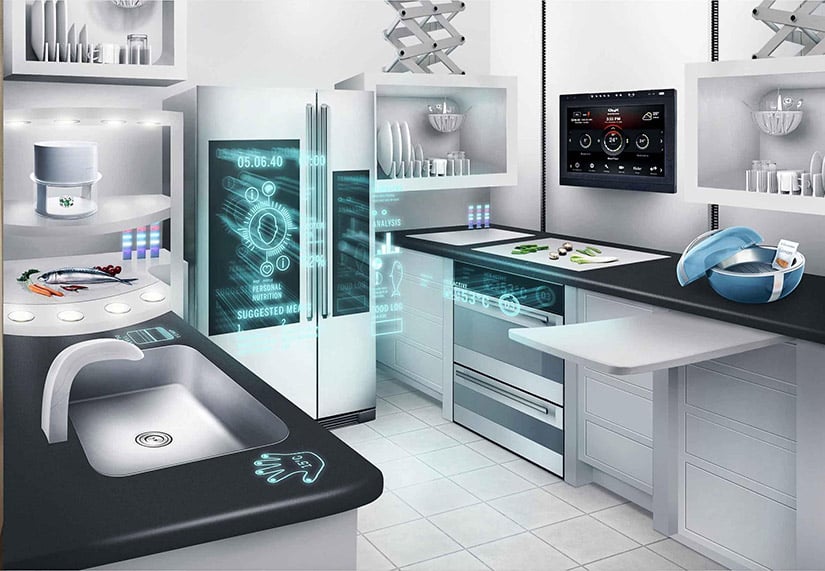
A lack of free time—and the desire for consistent results in the kitchen—are pushing appliance makers to build IoT connectivity into their devices more and more actively. Kitchen IoT is no longer just a trade-show novelty and is steadily going mainstream, where the fridge, oven, and kettle share data with each other and with the cloud, and the owner controls the process from a smartphone or by voice.
What the term ‘kitchen IoT’ really means
A “smart” kitchen is understood as a connected ecosystem of household appliances linked via a home Wi‑Fi network or cellular IoT connectivity. Temperature and motion sensors, cameras, and gas sensors collect information, and the devices transmit it to each other over machine-to-machine (M2M) protocols and to the cloud. This ongoing data sharing enables remote control, automations, and software updates that expand what the appliances can do over time.
The core elements of the ecosystem are straightforward: connected appliances, a mobile app or control panel, cloud services for data storage and processing, automation routines, and a voice interface as the top-level control layer.
Why the internet matters in everyday life
For a modern person who is used to actively using the internet in everyday life, such a system feels completely natural. Indeed, people have long considered the internet part of their daily routine, from checking the news in the morning to a variety of evening entertainment.
To unwind after a long workday, people most often turn to simple online games – arcade titles, lightweight multiplayer games, casual puzzle games. As promotions became widespread and no deposit free spins were introduced, iGaming entertainment also became popular, and it, too, requires a stable internet connection.
On weekends, people mostly use the internet to watch movies or listen to music. And, of course, throughout the week it is necessary for communication. A “smart” kitchen fits neatly into this pattern.
What these devices can do in real life
A smart refrigerator serves as a hub for food storage and inventory tracking. Its key functions include:
- monitoring and fine-tuning temperature via the app;
- alerts when items are nearing their expiration dates;
- identifying items using cameras and AI;
- recommendations based on the nutritional value of stored supplies;
- automatic integration with a shopping list.
As a result, the owner throws away less spoiled food and finds it easier to plan meals.
A smart oven has sensors and remote-control capability. Its features include: adaptive cooking modes, dish recognition with automatic program selection, saving user recipes, camera-based visual monitoring, remote start/stop with push notifications. The result is consistent, and you no longer need to hover by the oven door.
A connected cooktop and smart cookware with built-in sensors take over heat control. They warn about overheating and boiling over, automatically adjust power, track cooking stages, and send notifications to a smartphone. Milk boiling over and burnt porridge become a thing of the past.
A smart, temperature-controlled kettle with IoT control lets you set an exact temperature, set a morning schedule, use a keep-warm function, and control the process remotely. For tea or coffee lovers, it saves noticeable time every morning.
A smart stove places an increased focus on safety. In addition to remote monitoring and automation routines, it detects unusual situations (prolonged operation without supervision, abnormal heating) and triggers an automatic shutoff. Reducing at-home hazards here is no less valuable than convenience.
Voice control ties all these devices together into a single interface. With a single command, you can start a reheating routine, check the oven temperature, set a timer, or get a reminder. When your hands are covered in flour, it’s the only truly convenient way to interact with appliances.
Safety and maintenance without a technician visit
Remote diagnostics, automatic firmware updates, fault notifications, and emergency response protocols turn maintenance into a background process. The manufacturer receives telemetry data, and the user learns about a problem before it turns into a failure.
Who benefits
For users, an IoT kitchen provides convenience, consistent results, diet tracking, and lower energy consumption.
For manufacturers, it opens up service-based monetization models: subscriptions to advanced features, usage analytics, upselling consumables, and after-sales support that improves customer loyalty.
Three future directions
Precision cooking relies on improved sensors and algorithms. The system suggests quantities, adjusts modes in real time, and delivers repeatable results every time.
Meal planning becomes possible thanks to data aggregation on supplies, recipes, and consumption. The kitchen can suggest a weekly menu and flag nutrient imbalances.
Energy efficiency comes from automatic shutoff, mode optimization, and preventing overheating, which reduces both electricity bills and a household’s carbon footprint.
The growth of IoT kitchens depends directly on accessible, scalable connectivity infrastructure. Cellular IoT connectivity platforms such as Freeeway and similar solutions provide the technological foundation without which a unified smart-appliance ecosystem cannot operate reliably at scale.